解放路午夜热干面摊老板
The Midnight Hot Dry Noodles Vendor on Jiefang Road
深夜的解放路,与一碗热干面
有些城市的记忆,是刻在石头上的,譬如建筑;有些,却是揉在面团里的,譬如武汉的热干面。
从老废物乐园出来了,午夜十二点的解放路,路灯把行道树的影子拉得长长的,像一出疲惫的默剧。就在这光影的边缘,有一个摊子,已经安安静静地立了二十年。那不是什么宏伟的“深夜食堂”,只是一个卖热干面的简陋摊位,属于一个沉默的男人。
二十年,足够让一个婴儿长大成人,足够让一座城市的面貌几番更迭。而他,仿佛是时间河流中的一块顽石,任凭冲刷,依旧守着他的方寸之地,守着那口沸腾着生活百味的大锅。他的世界很小,小到只有一团面、几样调料、一勺滚烫的卤油;他的世界又很大,大到足以慰藉这座城市里无数个疲惫晚归的灵魂。
你看他那双手,关节粗大,指甲缝里或许还藏着昨日的面粉。就是这双手,日复一日,在蒸汽的缭绕中,捞起一撮撮筋道的面条,浇上芝麻酱,撒上腌得恰到好处的萝卜丁。整个过程,没有多余的言语,只有一种近乎仪式的专注。这专注,是对食物的敬意,是对时间的承诺。
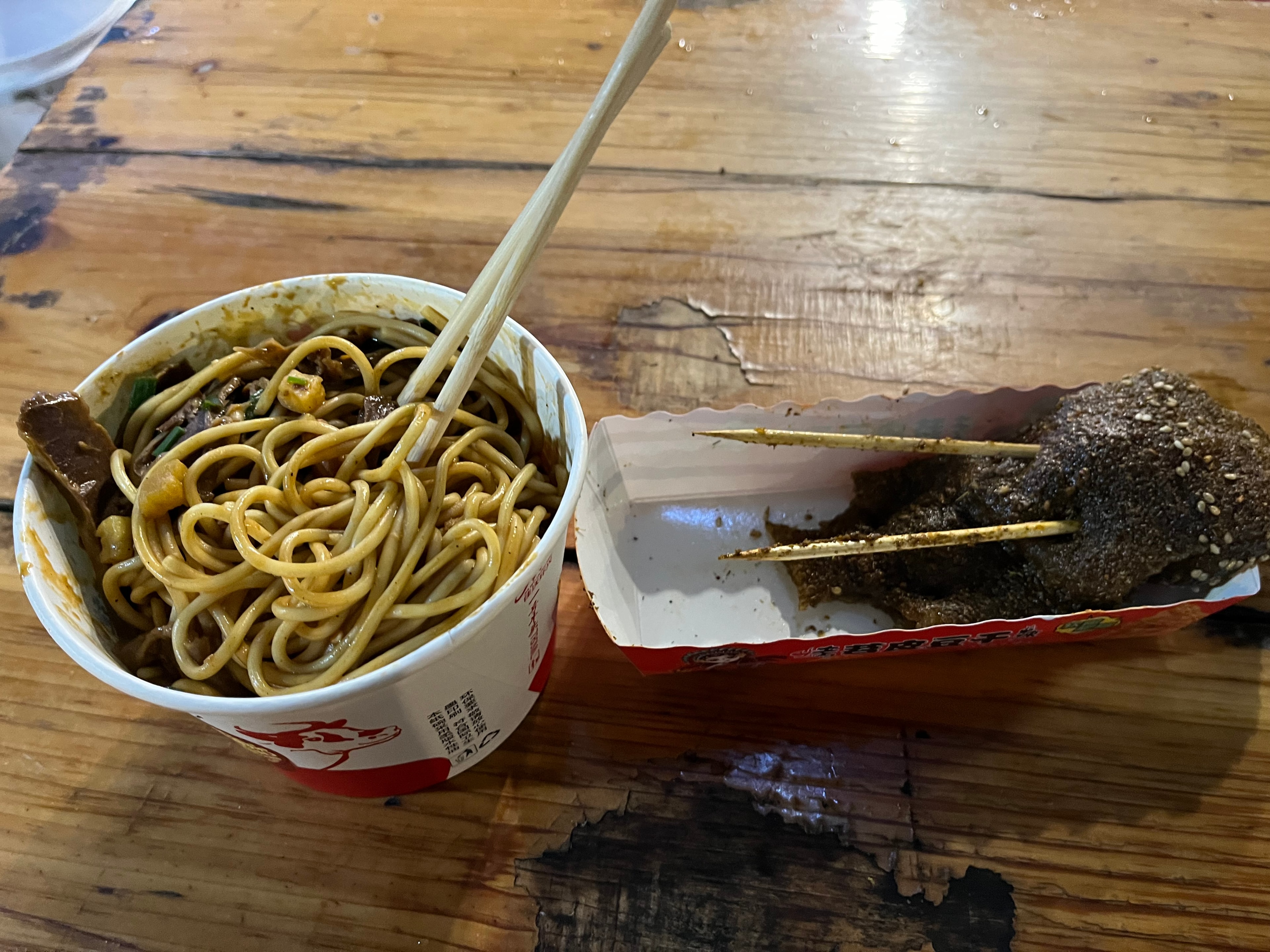
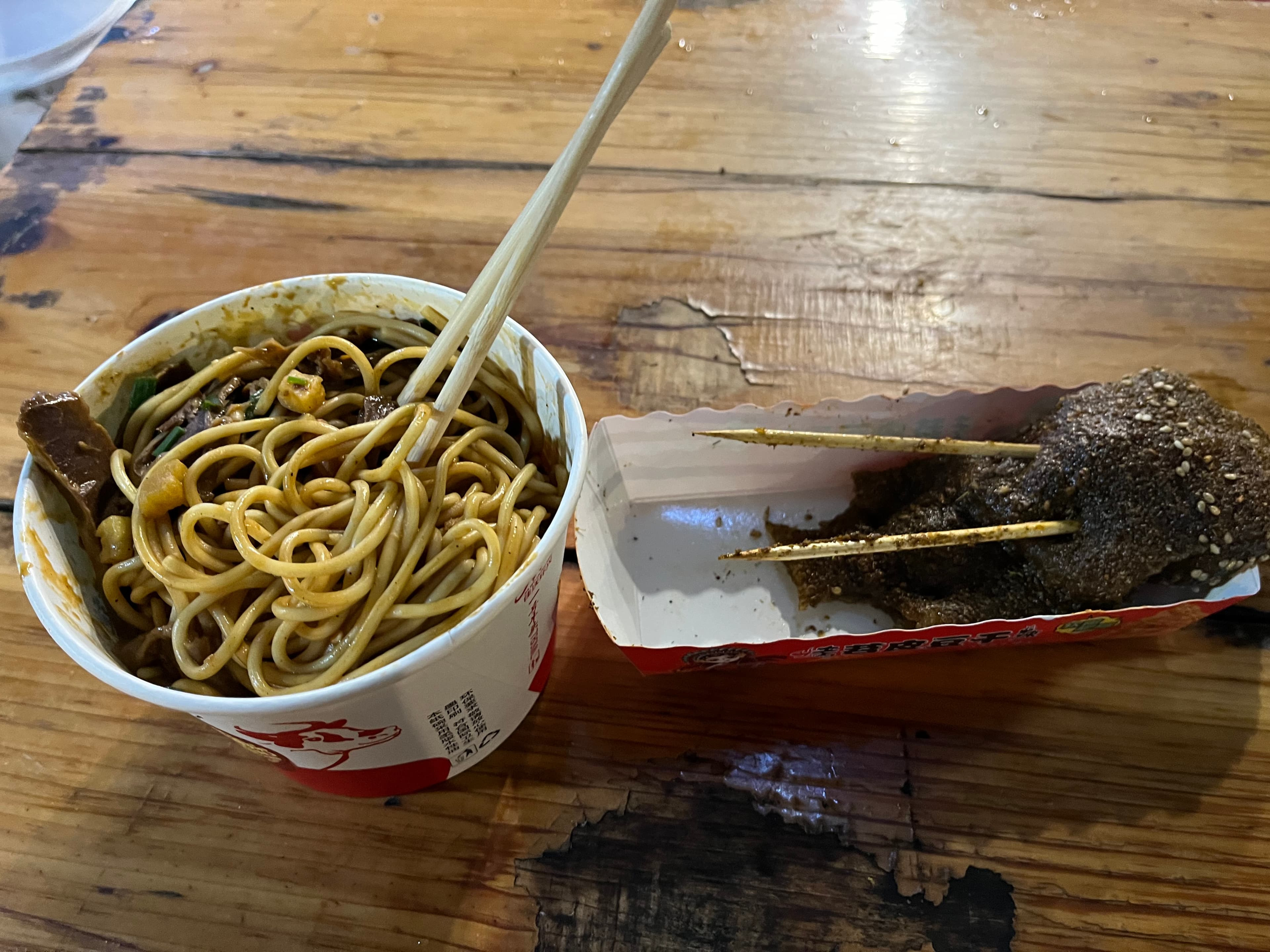
他的摊子,是这座巨大、喧嚣的城市里一个温柔的句点。出租车司机结束了一天的奔波,加完班的年轻人拖着被掏空的身体,或是刚刚失恋的女孩红着眼眶……他们来到这里,不说一句话,老板也从不多问。他只是默默地递上一碗面,那碗面,带着滚烫的温度和芝麻酱的浓香,仿佛在说:“我知道你累了,先吃点东西吧。” 知道我是台湾来的,老板还给了我一份免费的苕皮。
这是一种多属于东方式的体恤。它不喧哗,不拥抱,只是为你点一盏夜归的灯,给你一碗果腹的食。
Jiefang Road at Midnight, and a Bowl of Hot Dry Noodles
Some of a city's memories are carved in stone, like its architecture; others are kneaded into dough, like those of Wuhan's Jiefang Road.
At the midnight hour on Jiefang Road, the streetlights stretch the shadows of the trees into long, weary silhouettes, like a silent, exhausted play. And at the edge of this light and shadow, a stall has stood in quietude for twenty years. It is no grand "Midnight Diner," merely a humble stand selling hot dry noodles, belonging to a silent man.
Twenty years. It is long enough for an infant to grow into an adult, long enough for a city's face to change several times over. And he, like a stubborn rock in the river of time, remains, no matter how the currents wash over him. He guards his small patch of earth, guards that large pot boiling with the myriad flavors of life. His world is small, so small it consists only of a ball of dough, a few seasonings, and a ladle of scalding broth. Yet his world is also vast, so vast it can soothe the countless weary souls returning home late in this city.
Look at his hands—the knuckles are thick, the crevices of his nails perhaps still holding yesterday's flour. It is these hands that, day after day, amidst the curling steam, lift out handfuls of chewy noodles, douse them in sesame paste, and sprinkle them with pickled radish, seasoned to just the right degree. The entire process is devoid of superfluous words, marked only by a focus that is almost ritualistic. This focus is a reverence for food, and a promise made to time.
His stall is a gentle period at the end of a sentence in this vast, clamorous city. A taxi driver finishing a long day's run, a young professional dragging an emptied body after overtime, or a girl with red-rimmed eyes from a recent heartbreak... they come here. Not a word is spoken, and the owner never asks. He simply, silently, hands over a bowl of noodles. That bowl, with its searing heat and the rich aroma of sesame paste, seems to say, "I know you're tired. Eat something first."
What a classical, Eastern form of compassion this is. It does not shout, it does not embrace. It merely lights a lamp for your late return and offers you a bowl of food to fill your stomach.
This man is no hero; his own name is rarely even mentioned. He is just a person who, in the great torrent of our era, guards his small plot of land in the most unadorned way. His persistence is not for some grand ideal, but perhaps only for the most fundamental act of living. And yet, it is these countless, seemingly insignificant "livings" that ultimately converge to form the great river we call "a city," and its unique, unreplicable "warmth."
He does not say he "loves" this city, but every bowl of hot dry noodles he prepares with his own hands is the most heartfelt letter he could ever write to Wuhan.
照片 photo
更多武汉的故事
Discover more stories from Wuhan